PayPal Merchant Reporting

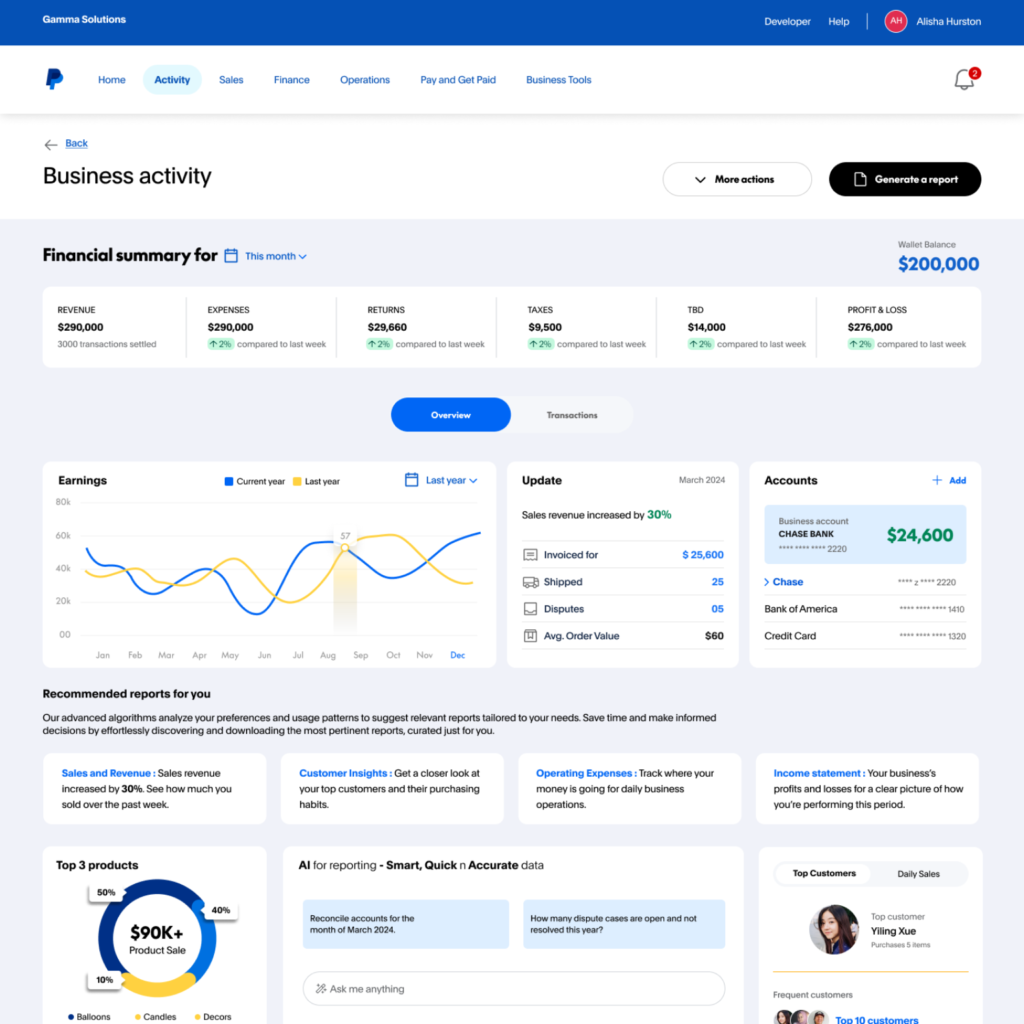
Enhancing PayPal Merchant Reporting with an intuitive and seamless user experience. Our solution simplifies data visualization, making transactions and insights easily accessible. Designed for efficiency, clarity, and effortless financial management.

Overview

Revamp PayPal’s merchant reporting experience, providing merchants with a more intuitive, customizable, and actionable reporting system. The new experience should empower merchants to track key metrics, generate insightful reports easily

Company

PayPal

Industry

Finance

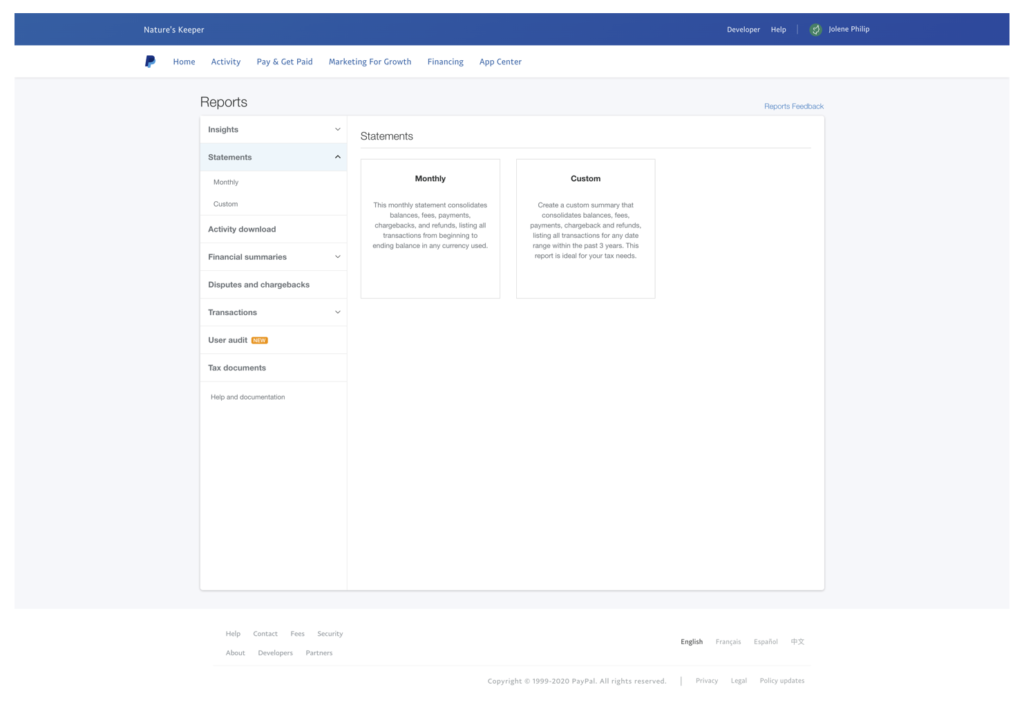
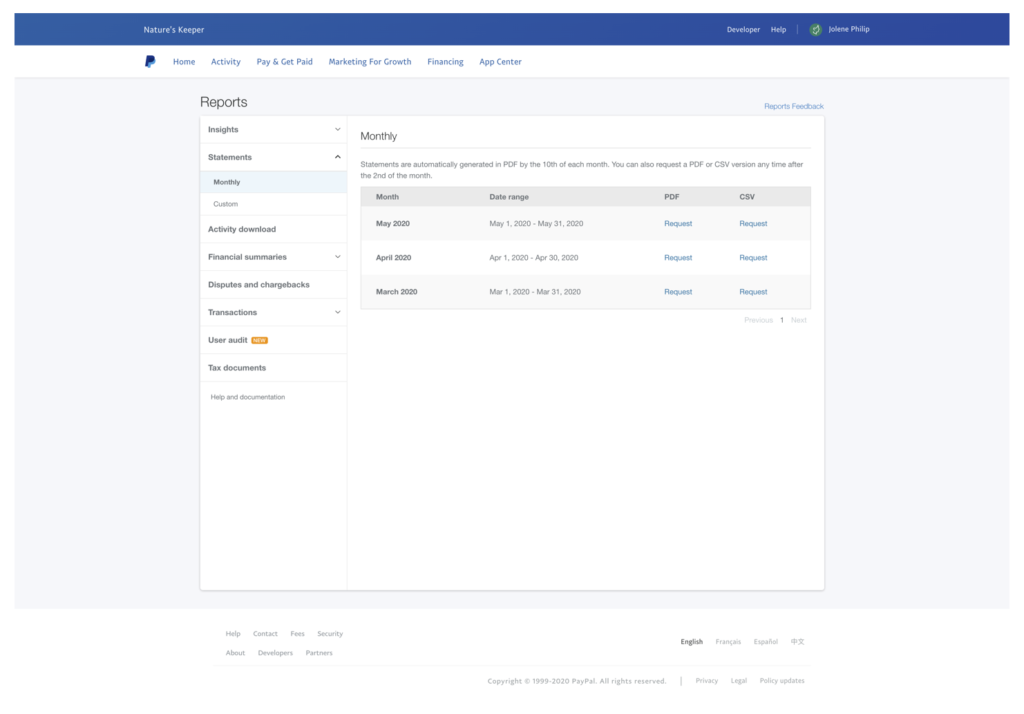
Merchants encounter several challenges with PayPal’s reporting system. The interface is overly complex and cluttered, making it difficult to locate essential reports. Limited customization options prevent merchants from generating tailored insights, while an overload of raw data without clear visualization complicates trend analysis. Report generation is often slow and inefficient, especially for large datasets, and the lack of seamless third-party integrations hinders synchronization with accounting platforms. Restricted mobile accessibility limits on-the-go usability, while inconsistent report formats create reconciliation challenges. Additionally, the absence of real-time insights delays alerts on unusual transactions or chargebacks, reducing merchants’ ability to proactively manage financial risks.

Thought Process

Before starting the UX solution, I identified key merchant pain points through research, interviews, and competitor analysis. User personas and journey mapping helped visualize workflow inefficiencies. I then structured the information architecture to simplify navigation and improve discoverability. Wireframing, prototyping, and usability testing ensured an intuitive, efficient design that addressed real user needs while aligning with business goals.

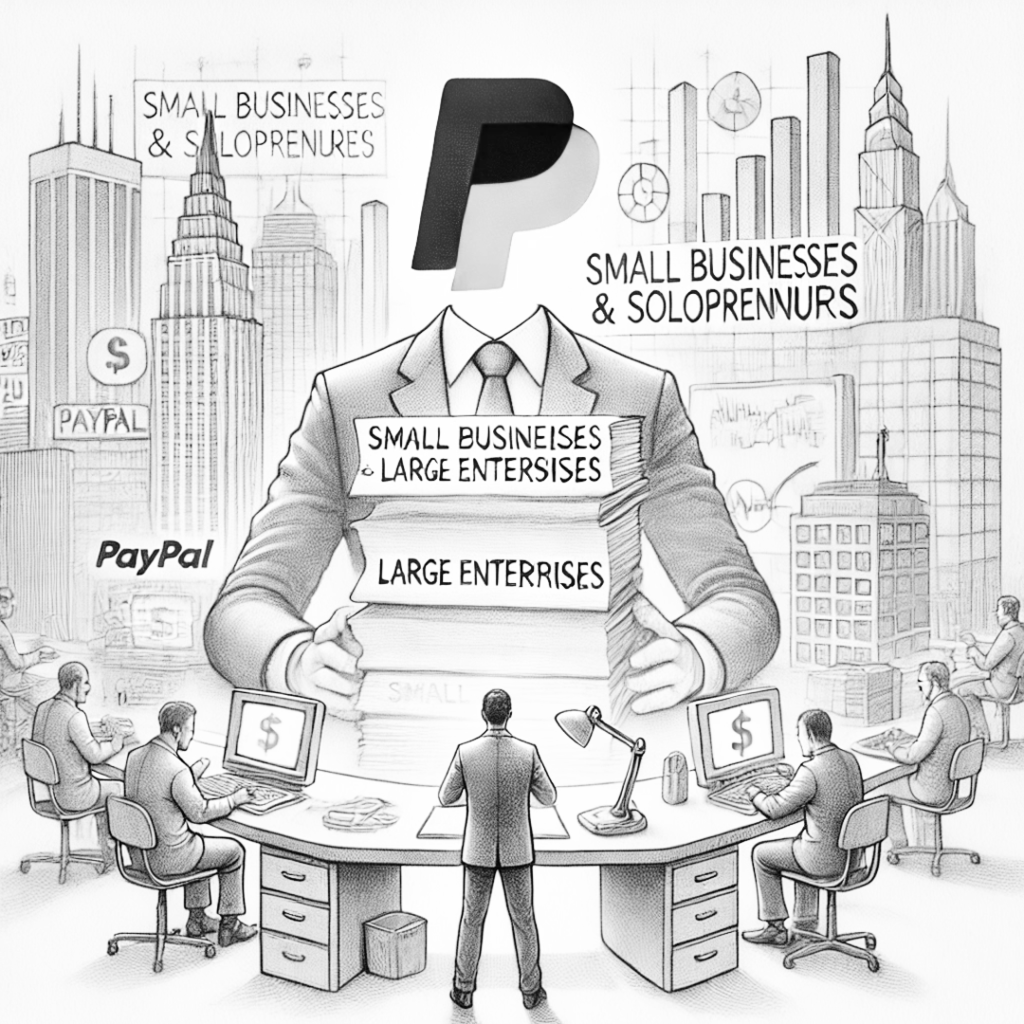
PayPal’s current merchant experience is primarily designed for large enterprises, with the same unified framework applied to smaller segments, such as SMBs and solopreneurs. While this approach ensures consistency, it often fails to address the distinct needs and challenges faced by smaller businesses. Unlike large enterprises with dedicated resources for payment management and technical integrations, SMBs and solopreneurs require a more streamlined, intuitive, and cost-effective solution tailored to their scale and operational complexity.

The one-size-fits-all model limits their ability to maximize the platform’s potential, leading to inefficiencies, missed opportunities, and friction in key areas such as onboarding, transaction management, and customer engagement. Smaller businesses often require simplified workflows, personalized support, and flexible pricing structures that align with their cash flow and growth trajectory.

As PayPal moves forward, adopting a more segmented and adaptive approach will be critical. By designing merchant experiences that cater to the unique needs of different business sizes, PayPal can enhance usability, drive higher engagement, and ultimately empower SMBs and solopreneurs to succeed. A tailored experience will not only strengthen merchant retention but also position PayPal as a more inclusive and strategic partner in the evolving digital commerce landscape.

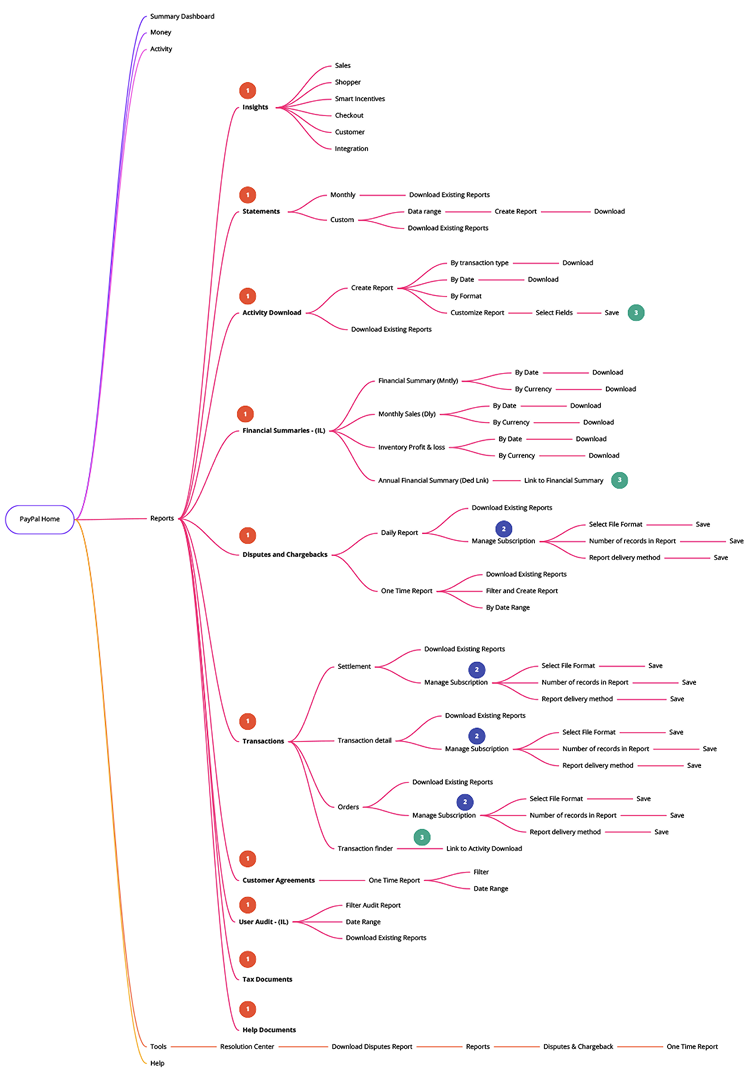
Efficiency and discoverability issues with Activity platform information architecture
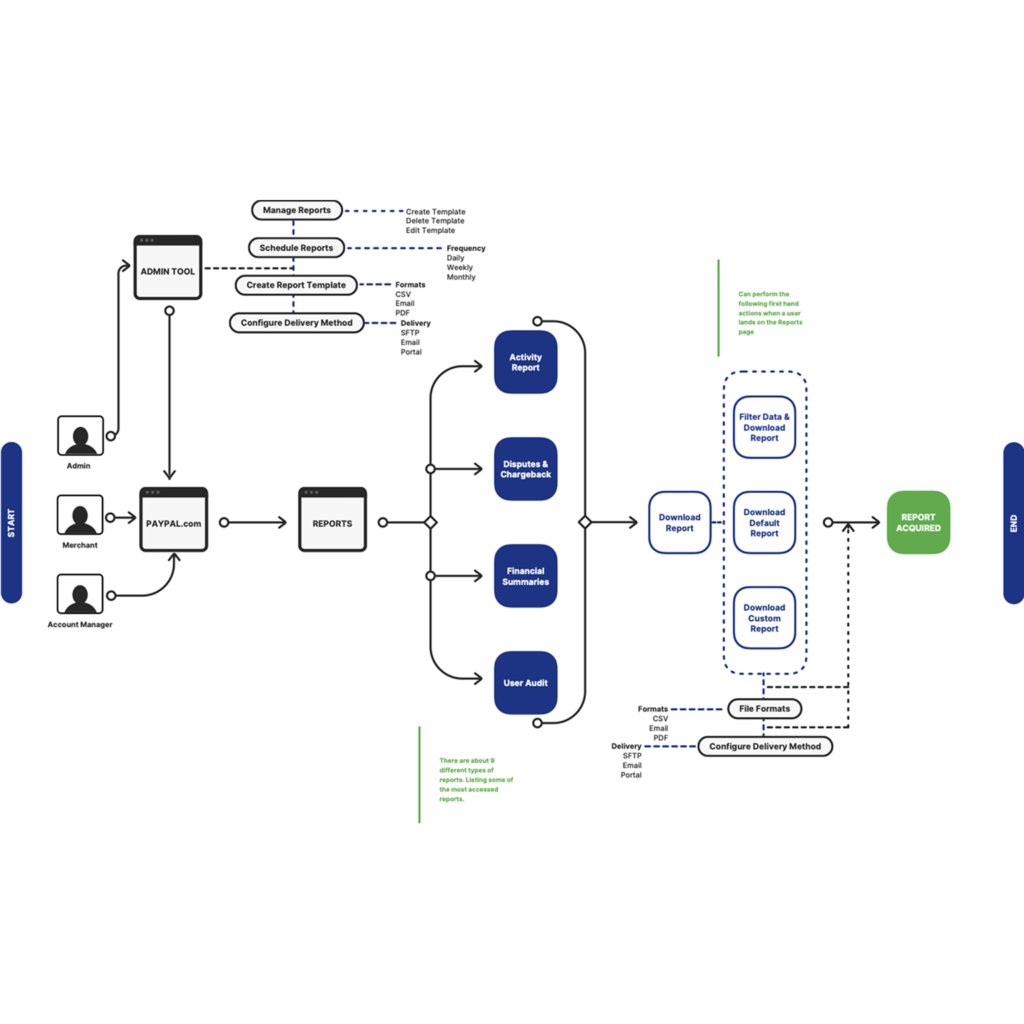
Mind Mapping to uncover the knots across the Reporting platform
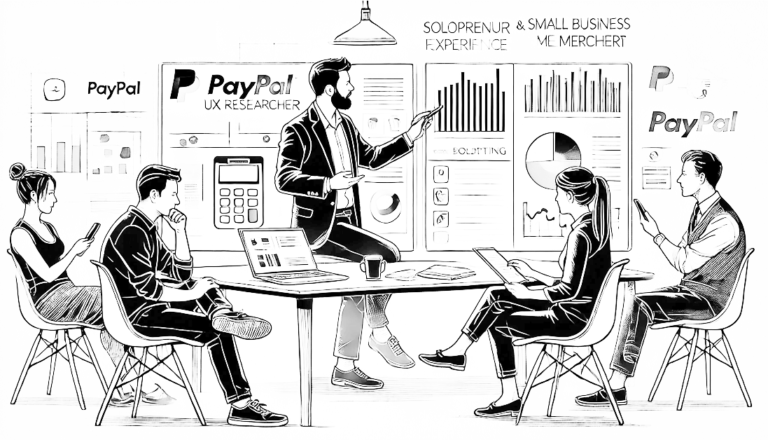
With the help of the Research team, we conducted research with a select group of Solopreneurs and a larger sample of small business merchants to gain deeper insights into their experiences, pain points, and expectations from PayPal’s activity platform. The objective was to understand how these businesses interacted with the platform in their daily operations, identify usability challenges, and uncover opportunities for improvement. By engaging directly with merchants, we captured a diverse range of perspectives, spanning different industries, business models, and levels of technical capabilities. The research focused on key aspects such as transaction tracking, payment reconciliation, reporting needs, and the overall efficiency of managing financial activities through PayPal. Additionally, the study explored merchants' expectations regarding intuitive navigation, customization options, automation capabilities, and proactive support features that could enhance their experience. Insights from these interactions informed design decisions, ensuring that the activity platform better aligned with the needs of smaller businesses, enabling them to manage their transactions more effectively with minimal friction.
As a merchant I would like PayPal to serve the activity based on the needs of my business, automatically and reduce the need for navigating across tabs or sections to access my Reports and Transaction by having to generate them manually, which is time intensive task. Need for a simpler Activity experience to understand their metrics and how they affect the business. And these are businesses that are in the very initial years. I would definitely look at an overall summary, but I would probably not look at any other accounting transactions and reports. Prefers to see a summary of metrics, as they don't have to spend time to interpret the data. ​

Solopreneur

  • Focuses on simplicity and immediate actionable insights
  • Looks at reports to track cash flow, and customer trends daily, weekly or monthly fluctuations
  • Looks at individual customer purchase histories or preferences.
  • Monitors business expenses to maintain profitability
  • Relies on tools like simple dashboards, basic analytics, or personal spreadsheets

Small Business

  • Focuses on Comprehensive and detailed reports
  • Tracks inventory, and customer behaviors at scale
  • Looks at individual customer purchase histories or preferences
  • Monitors business expenses to maintain profitability
  • Operates with a broader target market and scalability in mind
  • Access to more resources, including business loans
  • Sells over website and re-direct sales from social media to website
  • Streamlined Interface: Simplify and declutter the UI for easier navigation.
  • Advanced Customization: Custom reports with flexible filtering & formatting.
  • Data Visualization: Introduce interactive charts & dashboards for trend analysis.
  • Optimized Performance: Provide processing speed for faster report generation.
  • Seamless Integrations: Enable automatic syncing with accounting platforms.
  • Mobile Accessibility: Develop a fully functional mobile-friendly interface.
  • Standardized Formats: Ensure consistency of reports for easier reconciliation.
  • Real-Time Alerts: Provide instant notifications for unusual transactions and risks.

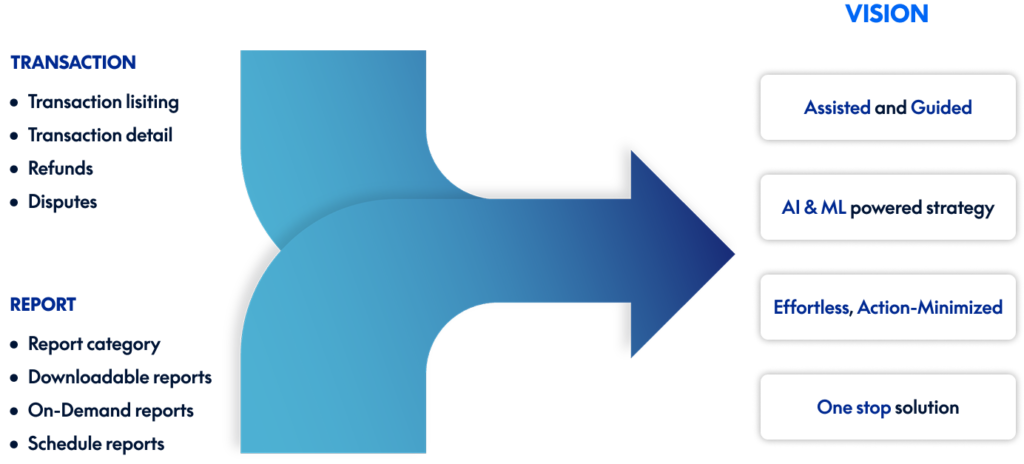
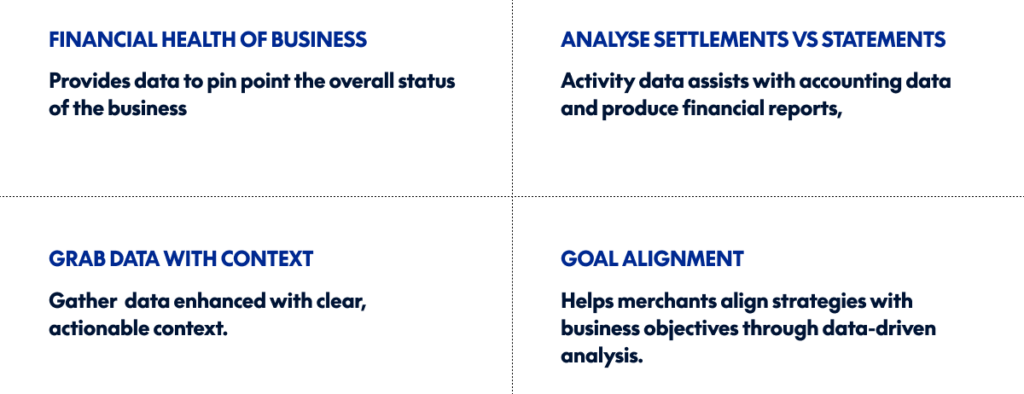
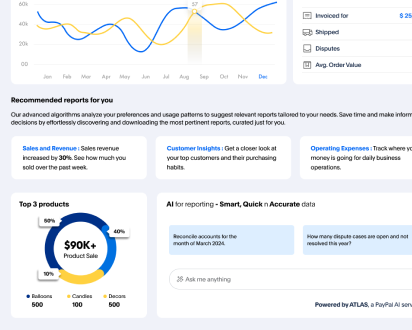
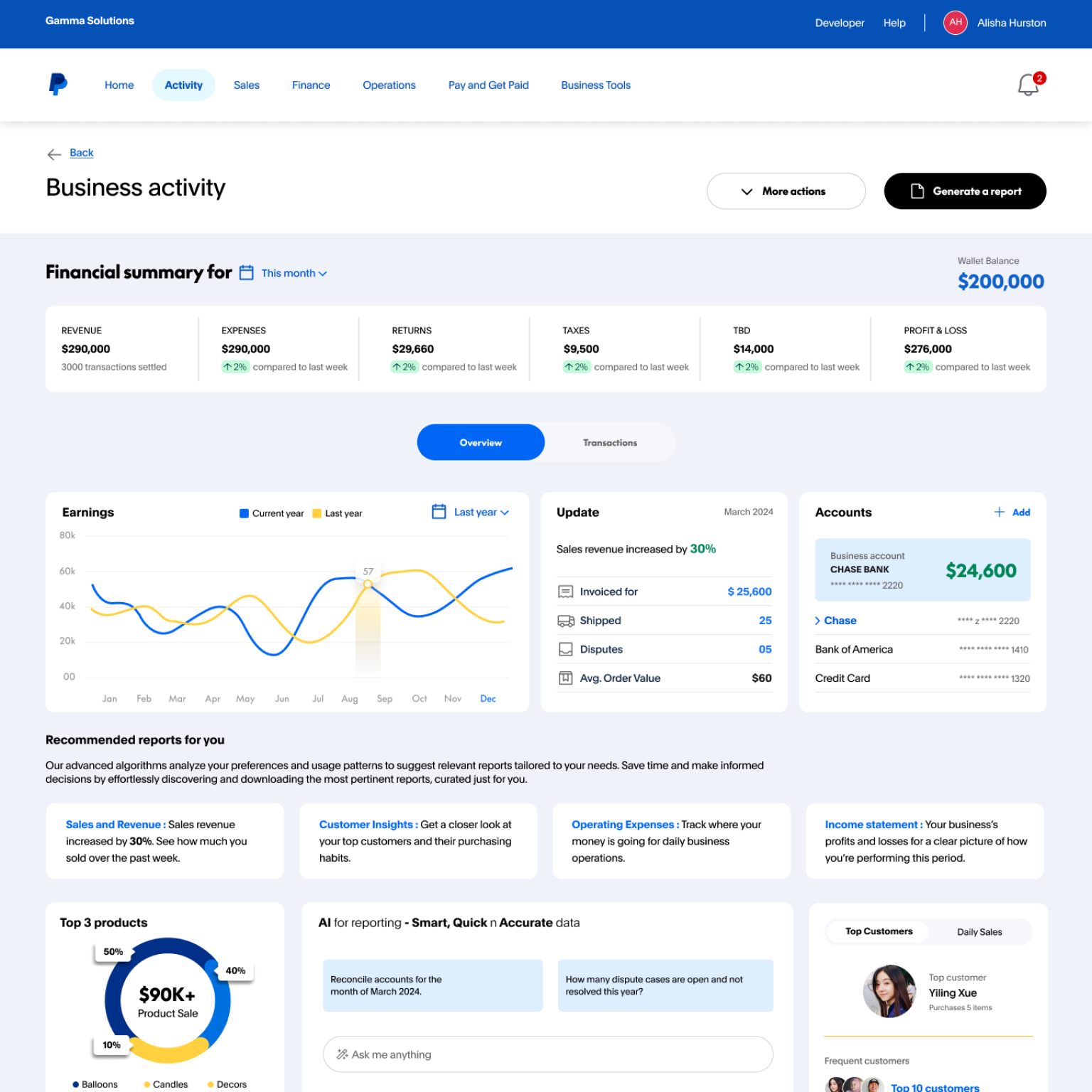
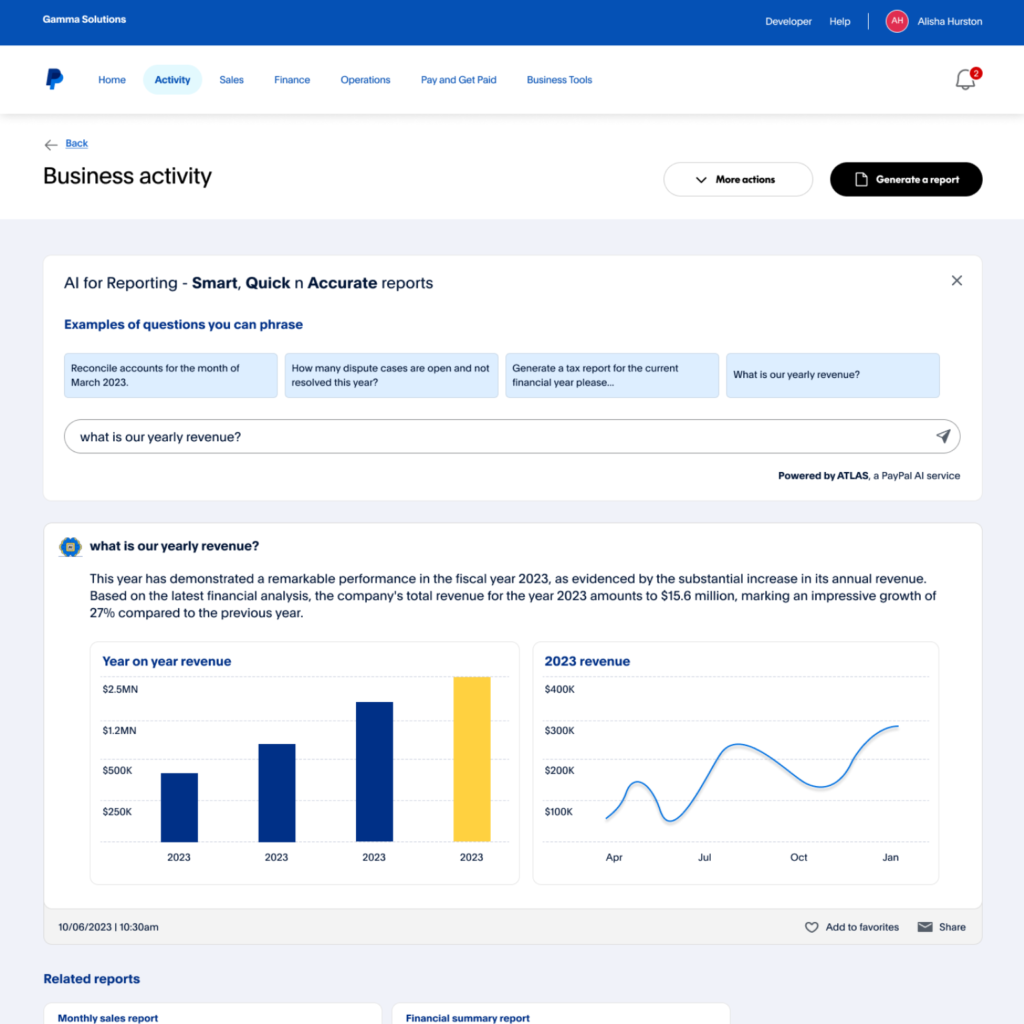
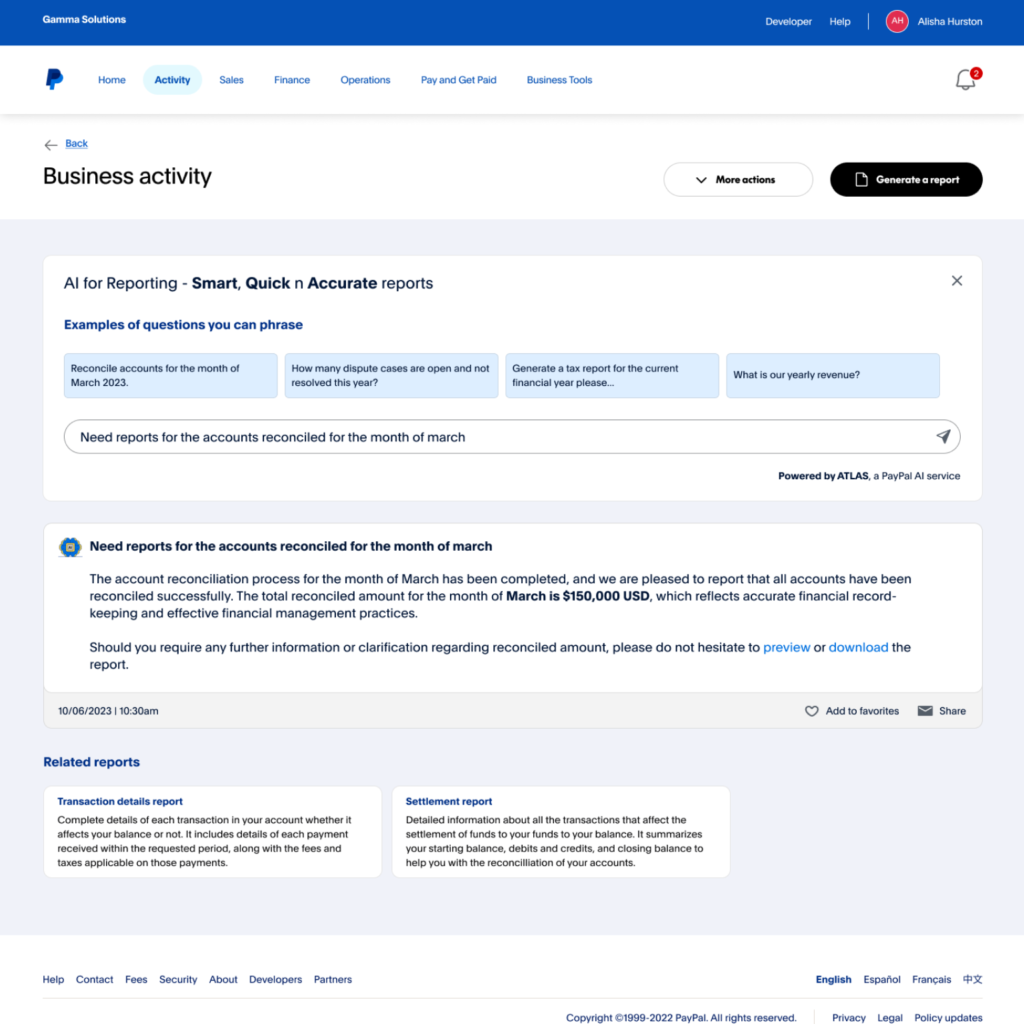
While the full benefits of the new dashboard are yet to be realized, early design evaluations indicate a promising shift toward dynamic, AI-powered reporting. The envisioned product, once built and deployed, is expected to offer a highly personalized and interactive experience that redefines data exploration. I eagerly anticipate validating these innovative concepts in a live environment, confident that they will streamline decision-making and transform user engagement.

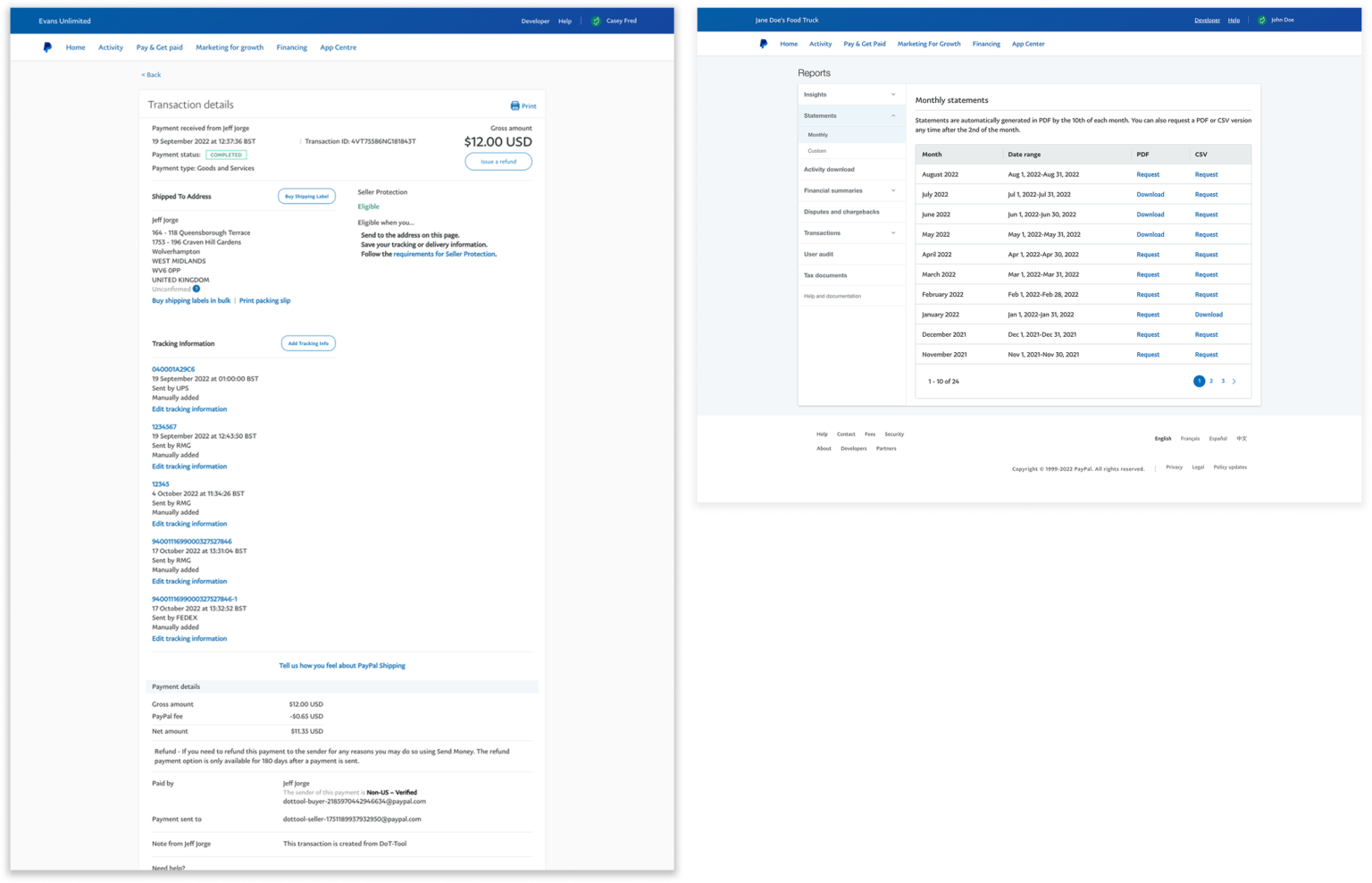
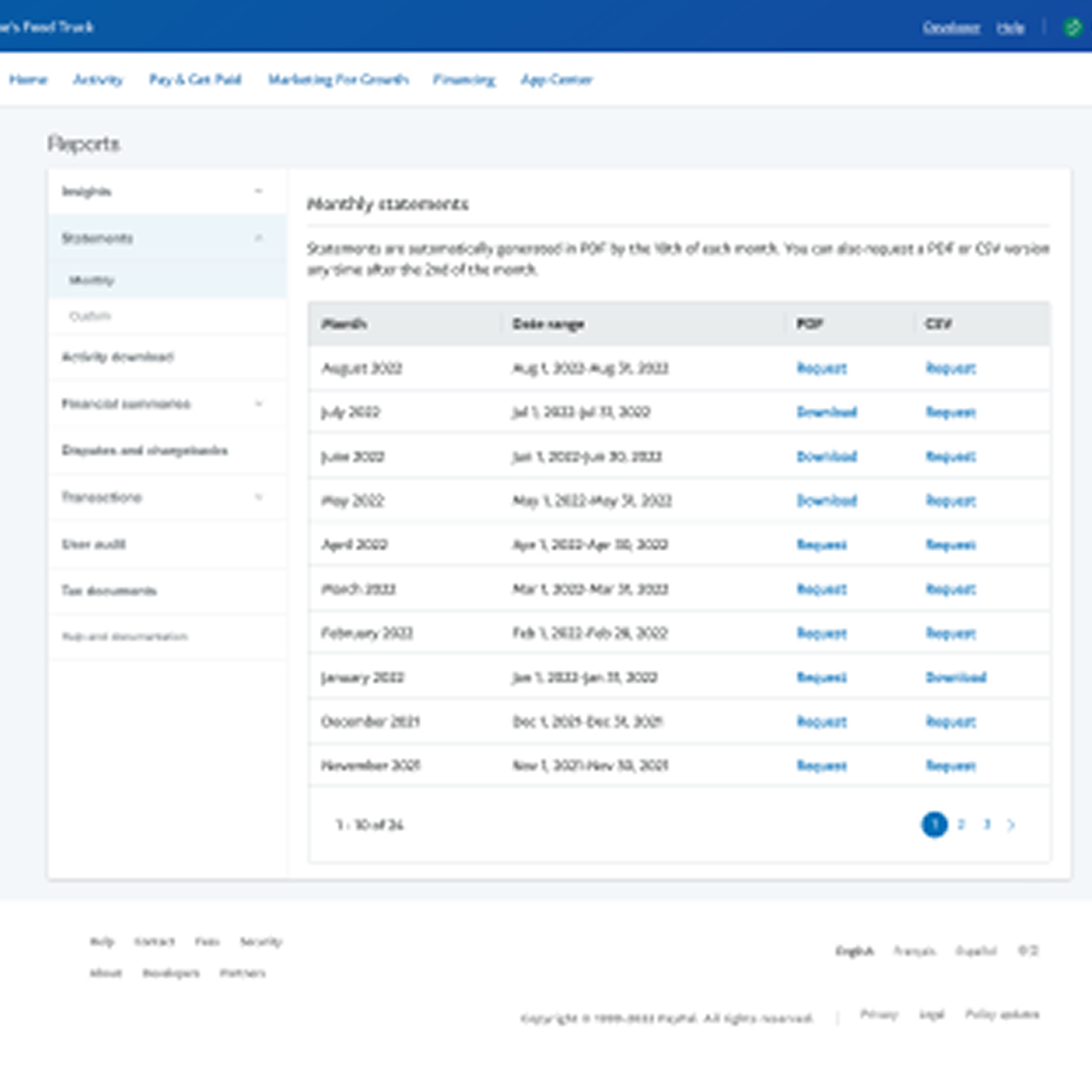
Before

Now

“Finding the right report in PayPal feels like searching for a needle in a haystack. The interface is cluttered and confusing, making it hard to locate essential data. Report generation is slow and inefficient, especially for large datasets. We lack real-time insights and clear visualization, which makes decision-making frustrating.”

Merchant

Solopreneur

Designs

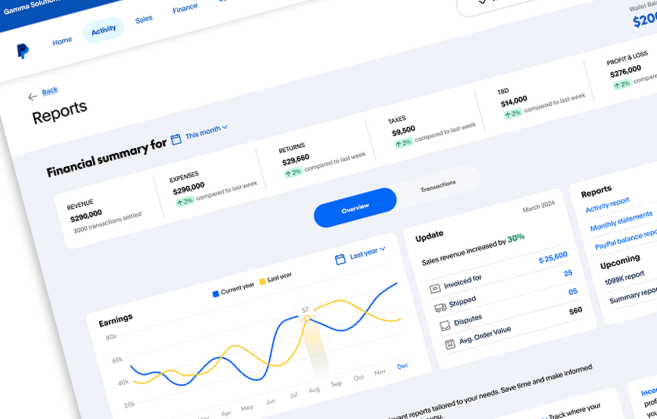
The redesigned PayPal Merchant Reporting system offers a simplified, intuitive interface it features interactive data visualizations, faster report generation, and seamless integrations with accounting platforms. Standardized formats simplify reconciliation. The solution empowers merchants to make informed, proactive financial decisions.

A glimpse into my journey as a User Experience Designer, sharing my professional background, design philosophy, and the impact I’ve made across industries.

Copyrigt © 2025 MAUX - VIKRAM SUNDERRAJ