
The Fraud Dashboard provides a streamlined view of detected fraud analytics, enabling account managers to monitor live campaigns and assess fraudulent activities efficiently. Built through in-depth research and collaboration, it offers quick insights for proactive fraud detection and decision-making.
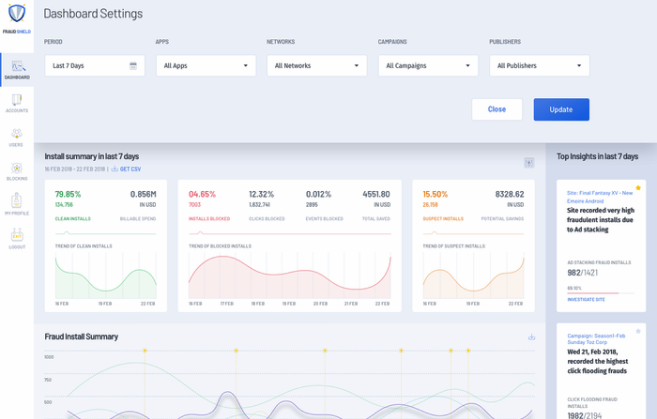
The fraud detection dashboard provides account managers with a quick and intuitive way to monitor live campaigns and identify fraudulent activities. It offers real-time insights into suspicious patterns, helping to assess and address fraud efficiently. The design is based on extensive research and collaboration with stakeholders to ensure effective fraud detection and analysis.
The challenge for me was to craft a dashboard that could efficiently handle complex fraud detection data while remaining intuitive for account managers with varying levels of expertise. Account managers needed to access real-time insights into live campaigns and detect fraudulent activities such as fake installs and other fraudulent actions quickly.
The key challenge lay in balancing the complexity of the data with a user-friendly, streamlined interface. Account managers required detailed insights into campaign performance, fraud patterns, and other metrics, but the data had to be presented in a clear, digestible manner to avoid overwhelming them.
Thought Process:
Understanding User Needs: The first step was to deeply understand the needs and pain points of the account managers. This was achieved through direct communication, interviews, and brainstorming sessions with stakeholders, including account and product managers. The goal was to understand their workflows, what data was most critical, and how they interacted with fraud detection information.
Defining Key Metrics: I worked worked closely with stakeholders to identify the most important fraud detection metrics and data points that needed to be highlighted in the dashboard. This ensured the dashboard focused on actionable insights and avoided overwhelming users with unnecessary information.
Prioritizing Simplicity: Recognizing that fraud detection can be complex, I focused on simplifying the experience. This involved considering how to present detailed data in a digestible way, ensuring the dashboard was intuitive and did not require extensive training to use.
User Segmentation: Understanding that users may have varying levels of expertise in fraud detection, I considered how to cater to both seasoned professionals and those with less experience. The design needed to provide enough context for less experienced users without oversimplifying the data for advanced users.
Research and Collaboration: I engaged myself in research to explore existing fraud detection tools and dashboards to understand industry best practices. This was followed by continuous collaboration with the product team to ensure alignment with the product’s goals and technical feasibility.
Wireframing and Prototyping: With a clear understanding of user needs, key metrics, and functional goals, I created wireframes and prototypes. These early iterations allowed for quick feedback and iterations before finalizing the design.
Focusing on Scalability: Finally, the thought process included ensuring that the design was scalable and flexible enough to adapt as the product evolved or as new fraud patterns emerged. This involved creating a framework that could be updated easily without disrupting the user experience.
By following this process, I tried to ensure that the dashboard would not only meet the immediate needs of users but also be adaptable and user-friendly in the long term.
The key challenge lay in balancing the complexity of the data with a user-friendly, streamlined interface. Account managers required detailed insights into campaign performance, fraud patterns, and other metrics, but the data had to be presented in a clear, digestible manner to avoid overwhelming them.
The solution was a streamlined dashboard that prioritized clarity and usability while presenting complex fraud data. Key fraud indicators and insights were prominently displayed, allowing account managers to quickly assess live campaigns and detect suspicious activities. The design incorporated intuitive navigation and contextual information to support both experienced and less experienced users. Through extensive collaboration and user testing, the dashboard effectively balanced detailed analytics with simplicity, enabling efficient decision-making and fraud detection. The result was an efficient, user-centric tool that improved fraud management and campaign monitoring.
The outcome of the experience was the successful creation of a user-friendly and efficient fraud detection dashboard that met the needs of account managers. The design effectively balanced complex data with an intuitive interface, allowing users to quickly assess live campaigns and identify fraudulent activities. The dashboard provided real-time insights into fraud patterns, enabling faster decision-making and more effective fraud management.
The collaboration and research process led to a design that was both functional and easy to use, even for account managers with varying levels of experience. Key metrics were prominently displayed, and the layout was optimized for quick access to critical information. User feedback during testing confirmed that the dashboard significantly improved the efficiency of fraud detection, with account managers able to monitor campaigns and respond to fraud more swiftly.
Overall, the design enhanced the user experience, improved campaign oversight, and contributed to more accurate and timely fraud detection, ultimately making the tool a valuable asset for account managers.
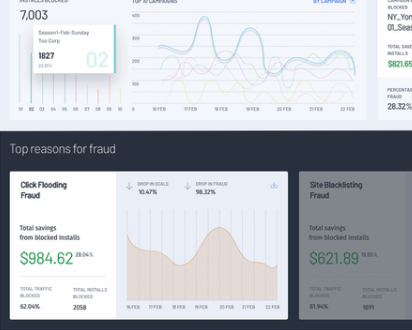

“Honestly, this new dashboard has been a game-changer. I can now spot fraud patterns in real-time without having to sift through so much data. It’s super easy to use, and it saves me a ton of time, letting me focus more on managing campaigns instead of dealing with issues.”
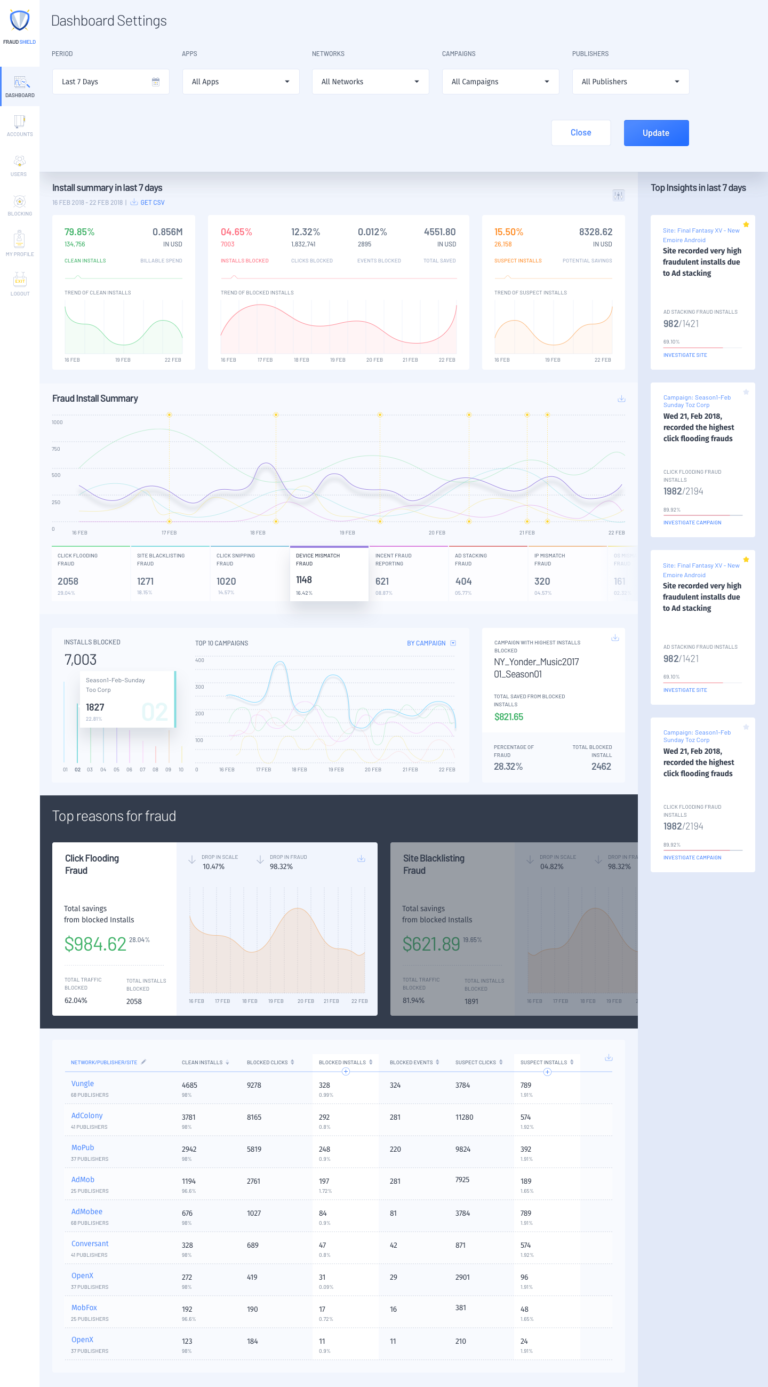
The experience design screens feature an intuitive, user-friendly layout that highlights key fraud detection data and real-time insights. Optimized for quick action, the design ensures account managers can efficiently monitor campaigns and detect fraud without being overwhelmed by complex information.

A glimpse into my journey as a User Experience Designer, sharing my professional background, design philosophy, and the impact I’ve made across industries.
Copyrigt © 2025 MAUX - VIKRAM SUNDERRAJ