
The Mobile Flash Shopping experience transforms traditional carousel ads with interactive elements and motion graphics, capturing attention within 4 seconds. This leads to higher engagement, better traction, and increased conversions.

Traditional interstitial ad carousels often fail to capture user attention, as they rely on static images with minimal context. Users tend to ignore them due to lack of engagement and relevance.
To overcome this, the Mobile Flash Shopping Experience introduces interactive elements and motion graphics that grab attention within 4 seconds. By enhancing visuals and interactivity, these carousel ads become more dynamic, informative, and engaging, leading to higher user interaction and better conversions.
The challenge was to overcome user disengagement by transforming carousel ads from static, easily ignored visuals into dynamic, interactive experiences that immediately capture attention. Traditional carousels often fail because they lack movement, context, and engagement, causing users to skip past them without interaction.
With just 4 seconds to make an impact, the solution needed to be visually striking, seamlessly interactive, and intuitive to navigate. By incorporating motion graphics, micro-interactions, and engaging touchpoints, the experience could break through user fatigue, encouraging them to explore, interact, and ultimately convert, making carousel ads not just seen, but truly experienced.
Thought Process
Before designing the Mobile Flash Shopping Experience, I focused on understanding user behavior, pain points, and engagement triggers. The goal was to transform passive carousel ads into active, high-engagement experiences. The thought process included:
Identifying the Problem – Why do users ignore carousel ads? Research showed that static visuals, lack of context, and minimal interactivity led to low engagement and high skip rates.
Understanding Attention Span – With only 4 seconds to capture interest, the experience needed immediate visual appeal, fluid motion, and intuitive interactions to hold attention.
Exploring Engagement Drivers – Users respond better to motion, touch-based interactivity, and personalized content. Introducing micro-interactions, gamification, or dynamic content could enhance engagement.
Creating a Seamless Flow – The transition between ad visuals and interactive elements had to feel natural, ensuring users felt guided rather than interrupted. The experience needed to be smooth, fast, and conversion-driven.
Testing and Iteration – Early prototypes explored different motion styles, interaction methods, and content formats. A/B testing helped determine which elements maximized engagement and conversions.
By following this thought process, I was able to design an interactive shopping experience that not only grabs attention but also sustains engagement, making carousel ads truly effective.
To make carousel ads more engaging and conversion-driven, the Mobile Flash Shopping Experience introduced interactive elements, motion graphics, and a user-centric flow. Instead of passive, static slides, the new experience encouraged active participation through touch-based interactions, animated transitions, and real-time engagement triggers. This approach ensured that users stayed engaged beyond the typical 4-second attention span.
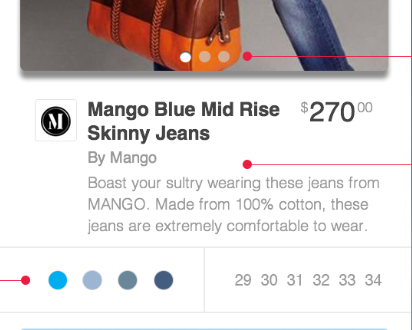
The solution focused on seamless interaction and visual appeal. Motion graphics added fluidity and drew attention, while micro-interactions like swipe gestures, tap-to-reveal content, and dynamic CTAs (Call-to-Actions) made the experience feel intuitive and immersive. Personalized content recommendations and gamified elements encouraged users to explore more and stay longer, leading to higher engagement and improved conversion rates. By designing a frictionless, interactive shopping journey, the new carousel experience successfully turned passive viewers into active participants.
By introducing motion graphics, micro-interactions, and touch-based engagement, users were more inclined to interact rather than skip past the ads.
The results were significant: User engagement increased by 40-50%, as interactive elements held attention beyond the typical 4-second threshold. Conversion rates improved by 10-25%, with more users clicking through and completing actions. Drop-off rates decreased, and brand recall saw a noticeable boost due to the immersive and visually appealing experience. Ultimately, this solution proved that dynamic, user-driven ads create a more compelling and effective shopping journey.
“This has totally changed how people interact with carousel ads! Instead of skipping, they’re engaging more, and we’ve seen a big jump in conversions. Clients love how it grabs attention and keeps users interested—it’s a game-changer!”
Copyrigt © 2025 MAUX - VIKRAM SUNDERRAJ